
Published 09/28/2026
What is the Gap Theory?
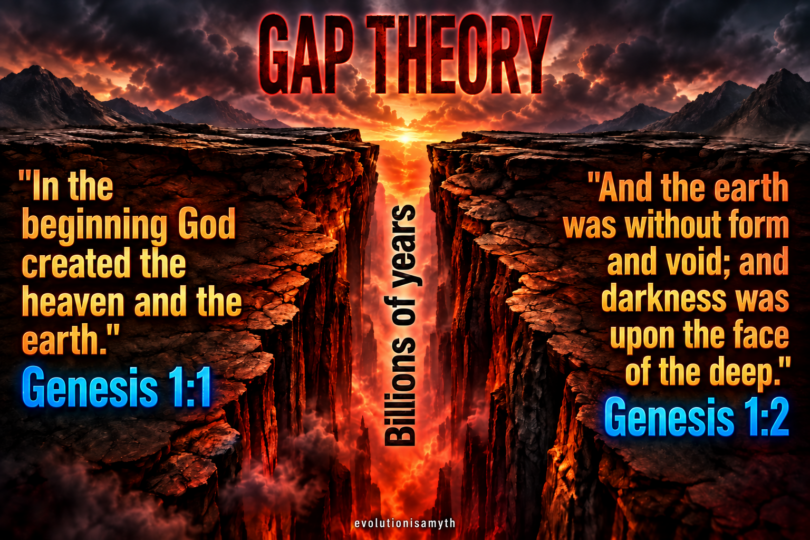
The Gap Theory is based primarily on an interpretation that places a long period of time between Genesis 1:1 and Genesis 1:2.
One attempt to reconcile Genesis with an ancient earth is commonly called the Gap Theory. The theory became much more widely known through writers such as G. H. Pember, particularly through his 1876 book Earth’s Earliest Ages, and later through C. I. Scofield’s 1909 Scofield Reference Bible.
The historical timing of the Gap Theory matters because it gained popularity as geologists increasingly argued that the earth was vastly older than traditional biblical chronology allowed. Therefore, the Gap Theory offered Christians a way to reconcile these developing geological interpretations with the straightforward reading of Genesis as describing creation in six days.
The Gap Theory proposes an unknown extended period of time, a “gap” between Genesis 1:1 and Genesis 1:2:
“In the beginning God created the heavens and the earth.”
“The earth was without form, and void…”
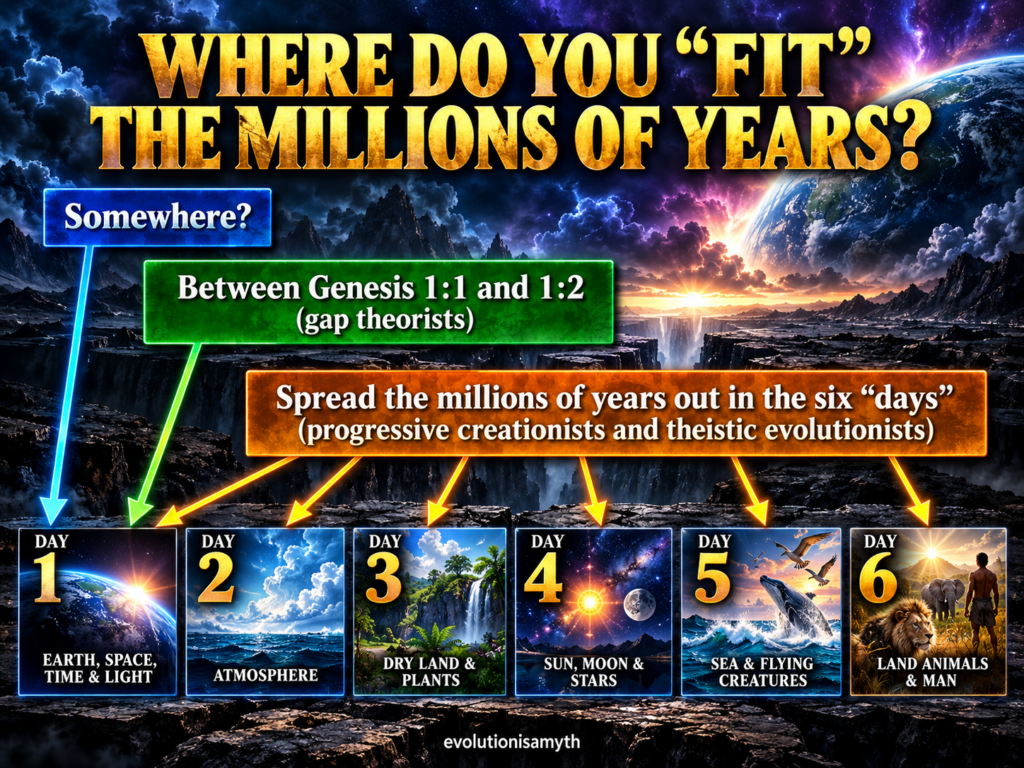
Under various versions of this interpretation, enormous periods of time, and sometimes an earlier creation and destruction, are placed into this proposed gap. But where does Genesis actually describe such a gap? It doesn’t. Genesis 1 contains no statement that millions or billions of years passed between verses 1 and 2. Genesis doesn’t describe previous generations of life flourishing and dying before the six creation days began.
Such a period must therefore be inserted between the verses rather than derived from them.
This is where Sola Scriptura becomes especially important. We should be very cautious about inserting an enormous period of unrecorded history into Scripture when the text itself never tells us that such a period occurred.
But what about 2 Peter 3:8, where “with the Lord one day is as a thousand years, and a thousand years as one day” This is the favorite verse of Gap Theory proponents- let’s take a look.
“One Day Is as a Thousand Years”
“But, beloved, do not forget this one thing, that with the Lord one day is as a thousand years, and a thousand years as one day.”
2 Peter 3:8
But notice what Peter does not say. He does not say that one day equals one thousand years. He says one day “is as” a thousand years and a thousand years “as” one day. More importantly, the context has nothing to do with defining the length of the creation days. Peter is addressing people questioning the apparent delay of Christ’s return:
“The Lord is not slack concerning His promise, as some count slackness, but is longsuffering toward us, not willing that any should perish but that all should come to repentance.”
2 Peter 3:9
Peter’s point concerns God’s relationship to time and His patience in fulfilling His promise. It is not a mathematical formula telling us to multiply the days of Genesis by one thousand, much less by millions or billions. And even if someone incorrectly substituted one thousand years for each creation day, six thousand years would still come nowhere close to the billions of years required by modern evolutionary timelines. Using 2 Peter 3:8 to redefine the creation days therefore does not come from the context of either Genesis 1 or 2 Peter 3.
WHAT ABOUT THE STARS IN JOB?
Did God tell Job that physical stars were present when the earth was created? No.
The passage Job 38:4–7 does not say that physical stars existed before the earth. Job says that when God laid the earth’s foundations, “the morning stars sang together, and all the sons of God shouted for joy.”
This is Hebrew poetic parallelism. The “morning stars” are paralleled with the “sons of God,” a term Job uses for heavenly beings in Job 1:6 and 2:1. The passage describes heavenly beings rejoicing over God’s creation, not establishing a geological chronology for literal stars but the angels, etc.
Sons of God = Morning Stars = Angels
The same Hebrew phrase is used across these passages:
- Genesis 6:2 — בְנֵי־הָאֱלֹהִים (bene ha’elohim) = “sons of God”
- Genesis 6:4 — בְנֵי הָאֱלֹהִים (bene ha’elohim) = “sons of God”
- Job 1:6 — בְּנֵי הָאֱלֹהִים (bene ha’elohim) = “sons of God”
- Job 2:1 — בְּנֵי הָאֱלֹהִים (bene ha’elohim) = “sons of God”
- Job 38:7 — בְּנֵי אֱלֹהִים (bene elohim) = “sons of God”
Note as further evidence, in Job 1:6 and Job 2:1, Satan appears among the bene ha’elohim, “sons of God”: “Now there was a day when the sons of God came to present themselves before the LORD, and Satan also came among them.” — Job 1:6
WHY THE GAP THEORY FAILS
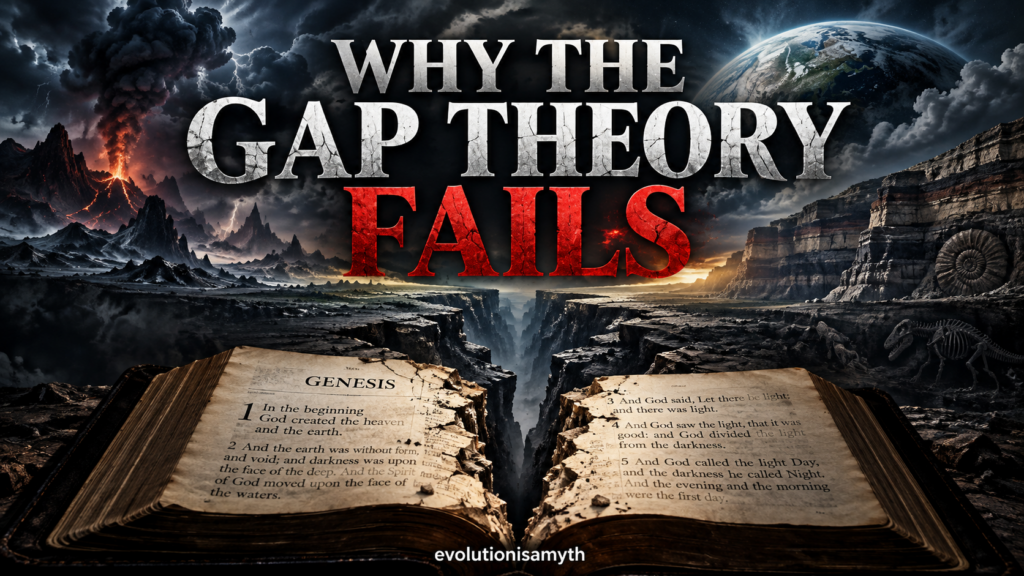
The Gap Theory fails because it requires the reader to insert a vast span of time, an entire pre-Adamic world, and a catastrophic destruction between Genesis 1:1 and Genesis 1:2, even though the text itself says none of these things. Genesis simply states that God created the heavens and the earth, then describes the earth as “without form, and void” before proceeding into the six days of creation. No biblical statement says the earth “became” ruined, no description of a previous civilization, and no indication that millions or billions of years should be placed between these two verses.
The theory also conflicts with Scripture’s broader testimony. Exodus 20:11 declares, “For in six days the LORD made the heavens and the earth, the sea, and all that is in them.” That language is comprehensive. It does not describe six days of repairing an already ancient world, but six days in which God made the heavens, the earth, the sea, and everything in them. Jesus likewise said that God “made them male and female” “from the beginning of the creation” (Mark 10:6). If billions of years had already passed before Adam and Eve appeared, calling their creation “the beginning” becomes exceedingly difficult to explain.
Most importantly, the Gap Theory did not arise naturally from the plain reading of Genesis.
It became attractive after geological theories of an ancient earth gained influence and gave Christians a way to insert vast ages into Scripture without abandoning six literal creation days. But the theory solves a problem created outside the biblical text by importing that problem back into Genesis. Rather than letting Scripture define its own chronology, the Gap Theory forces Genesis to accommodate a geological timescale the passage never mentions.
Let Scripture Speak for Itself
The age of the earth is not a salvation issue. Scripture is clear that salvation is by God’s grace through faith:
“For by grace you have been saved through faith, and that not of yourselves; it is the gift of God.”
Ephesians 2:8
Christians can disagree about the age of the earth without questioning one another’s salvation. But that does not mean interpreting Genesis is unimportant. If we claim to follow Sola Scriptura, we should begin with Scripture and allow Scripture to interpret Scripture. We should not begin with a conclusion required by an outside worldview and then look for a place to insert it into the biblical text.
Genesis describes six numbered days, each marked by evening and morning. Exodus 20 directly compares those six creation days and God’s seventh-day rest with man’s six-day workweek and seventh-day Sabbath. Genesis says God finished His creative work. Adam is presented as specially created by God, and later Scripture treats him as part of mankind’s historical genealogy.
None of this requires us to deny legitimate scientific observations. It simply requires us to distinguish between what Scripture actually says and interpretations brought to Scripture from outside it.
For the Christian, our confidence ultimately rests not in our ability to make God’s Word conform to every changing human theory, but in allowing God’s Word to speak for itself.
Doubt man’s changing interpretations. Believe God.
