
Updated 09/26/2026
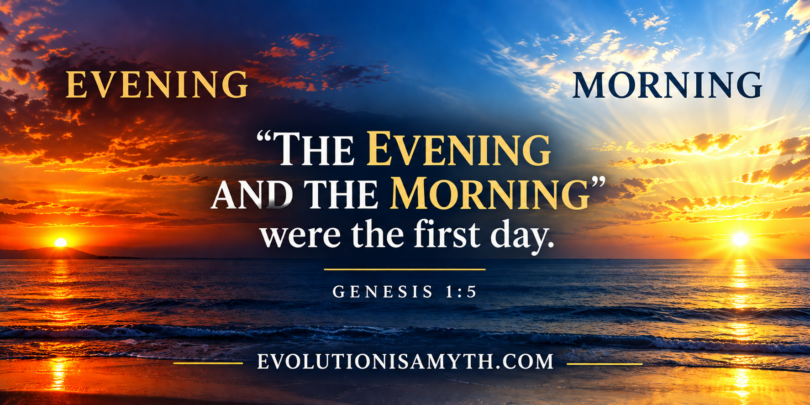
Beginning with the first day, Scripture establishes a consistent pattern: light is called “Day,” darkness is called “Night,” and each creation day is marked by “the evening and the morning.” This same formula is then repeated for six consecutive days, with each day specifically numbered.
Then God said, “Let there be light”; and there was light. And God saw the light, that it was good; and God divided the light from the darkness. God called the light Day, and the darkness He called Night. So the evening and the morning were the first day. (Genesis 1:3–5)
Then God said, “Let there be a firmament in the midst of the waters, and let it divide the waters from the waters.” Thus God made the firmament, and divided the waters which were under the firmament from the waters which were above the firmament; and it was so. And God called the firmament Heaven. So the evening and the morning were the second day. (Genesis 1:6–8)
Then continue with your existing passages for Days 3–6 and Genesis 2:1–3.
Conclusion
The pattern could hardly be more consistent. Genesis describes evening and morning, evening and morning, evening and morning, six times in succession, while numbering each as the first, second, third, fourth, fifth, and sixth day. After those six days were completed, Scripture identifies a seventh day on which God rested. Read naturally, the text presents creation as six successive days consisting of evenings and mornings, followed by the seventh day of rest.
