

The vast majority of what we call recorded human history fits within only the last five to five-and-a-half thousand years.
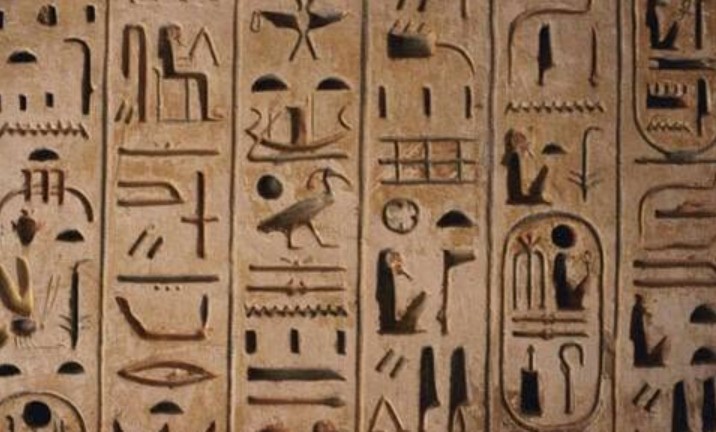
The earliest generally recognized writing appears in Mesopotamia during the late fourth millennium B.C. Harvard describes surviving Mesopotamian written records beginning around 3400 B.C., while the British Museum dates the development of cuneiform to before 3200 B.C.¹ ² Egyptian hieroglyphic writing appeared at approximately the same time, around 3250 B.C.³
This produces an interesting historical observation. According to conventional evolutionary chronology, anatomically modern humans have existed for hundreds of thousands of years. Yet recognizable written civilization appears extremely late in that proposed timeline. Cities, governments, accounting systems, historical records, literature, dynasties, and extensive written documentation suddenly appear only in the last several thousand years.
EARLIEST WRITTEN HISTORY
Some of humanity’s earliest surviving writing comes from the Sumerian cities of Mesopotamia. These first records were remarkably practical. They recorded commodities, rations, property, and economic transactions. The British Museum explains that cuneiform began as a bookkeeping system used to track such things as bread and beer distributions.²
Egypt developed writing at approximately the same time. The British Museum dates the invention of Egyptian writing to about 3250 B.C., originally associated with administration and the storage and distribution of goods.³
Thus, when we move from reconstructed prehistory into history documented by people themselves, we arrive only about five thousand years ago.
PREHISTORY IS RECONSTRUCTED DIFFERENTLY
Dates assigned to human activity before written records are not historical dates in the same sense as a dated inscription, king list, contract, letter, or contemporary account. Archaeologists reconstruct them primarily through archaeology and scientific dating methods.
Radiocarbon dating, for example, measures the amount of carbon-14 remaining in organic material. The raw measurement does not directly provide a calendar date. Oxford University’s Radiocarbon Accelerator Unit explains that radiocarbon measurements must be calibrated because atmospheric carbon-14 concentrations have changed through time. Calibration curves derived from tree rings and other independently dated materials then convert the measurement into an estimated calendar range.⁴
This does not mean radiocarbon dating is arbitrary. It does mean, however, that dates extending beyond written history are reconstructed through measurements, calibration curves, archaeological context, statistical models, and assumptions about how those measurements relate to calendar time.
There is therefore an important difference between saying, “A tablet written by people living at this time records this event,” and saying, “A material recovered from this archaeological layer produces a calibrated age estimate.”
THE PUZZLE OF VERY LATE RECORDED CIVILIZATION
If modern humans have existed for hundreds of thousands of years, the scarcity of recognizable written history during most of that proposed span deserves consideration.
Writing appears only recently. Extensive written government records appear recently. Named kings, contracts, taxation, literature, laws, genealogies, commercial records, and detailed descriptions of everyday life all cluster within the last several thousand years.
Once writing develops, however, human history becomes increasingly visible very quickly. Mesopotamia alone left enormous numbers of clay tablets documenting economic, political, legal, religious, and personal activities. Harvard notes that clay’s durability has made Mesopotamia exceptionally well documented from approximately 3400 B.C. onward.¹
This raises a reasonable question: if human intellectual capacities essentially like ours existed for an enormous span before civilization, why does detailed recorded human history occupy such a small fraction of the conventional human timeline?
This question does not by itself establish when humanity began. Archaeologists point to settlements, tools, burials, art, agriculture, and other evidence predating writing. But those periods are, by definition, prehistoric. Their chronology is reconstructed rather than recorded by written witnesses.
A TIMELINE CONSISTENT WITH A RECENT HUMAN HISTORY
The biblical chronology presents humanity and civilization as recent phenomena measured in thousands rather than hundreds of thousands of years. Whatever chronology one ultimately accepts, it is striking that the portion of human existence we can actually read in people’s own words is remarkably short.
Our enormous libraries of human history do not extend hundreds of thousands of years into the past. They extend only a few thousand.
The farther we travel beyond written history, the more our chronology necessarily depends upon archaeological interpretation and scientific dating rather than contemporary human records. That distinction should not be overlooked.
Sources
¹ Harvard University, Department of Near Eastern Languages and Civilizations, “Ancient Near Eastern Studies.” Mesopotamian texts survive from approximately 3400 B.C. onward.
https://nelc.fas.harvard.edu/ancient-near-eastern-studies-0
² British Museum, “How to Write Cuneiform.” Cuneiform originated in what is now Iraq before 3200 B.C.
https://www.britishmuseum.org/blog/how-write-cuneiform
³ British Museum, “How Egyptian Hieroglyphs Were Decoded.” Egyptian writing developed around 3250 B.C.
https://www.britishmuseum.org/exhibitions/hieroglyphs-unlocking-ancient-egypt/egyptian-hieroglyphs-decipherment-timeline
⁴ Oxford Radiocarbon Accelerator Unit, “Radiocarbon Calibration.” Radiocarbon measurements require calibration to translate them into calendar ages.
https://c14.arch.ox.ac.uk/calibration
