February 3, 2024- updated 10/06/2026
Viruses are among the fastest-mutating genetic systems known, and because of this, they are often presented as some of the clearest examples of evolution occurring in real time. I do not dispute that viruses mutate, nor do I dispute natural selection. The question is what these processes actually accomplish and whether the observed changes demonstrate progressive genetic improvement.
From a creationist worldview, life began as God’s deliberate act of creation and was originally described as “very good.” Life was built upon an enormously complex, highly ordered, and functional genetic language, much like a programming code. Mutations are subsequent changes to that original code. However, not all biological variation comes from newly arising mutations. Alleles create genetic variation from pre-existing genetic code, producing differences in traits such as eye color, hair color, pigmentation, and countless other characteristics. Natural selection can then act upon these already-existing variants by changing their frequency within a population.
Mainstream evolutionary theory generally proposes that these allelic variants ultimately originated through mutations and other genomic changes in the past. From a creation model, however, much of this variation may have been deliberately built into the original genetic architecture from the beginning. This distinction matters because natural selection acting on pre-existing variation does not, by itself, demonstrate the constructive power of a new mutation. It shows the sorting of genetic options already present.
For large-scale evolutionary change, mutation must do more than merely reshuffle or select among existing variants. It must generate heritable genetic changes that produce genuinely new biological function. In evaluating this claim, I am particularly interested in de novo germline mutations that alter a protein’s amino acid sequence, change the resulting folded protein’s function, and produce a measurable biological advantage. This provides a much stronger test of whether mutation is actually building new function rather than simply modifying, disabling, or degrading what already exists.
Therefore, genetic mutations are a form of genetic entropy because they alter the original genetic code and overwhelmingly introduce damage, loss, or deterioration rather than improvement. Some mutations may provide a conditional advantage under a particular environmental circumstance, but an advantage is not necessarily an overall improvement in the genetic system. A mutation can help an organism survive one condition while simultaneously damaging an existing biological function.
Living systems also contain numerous mechanisms that reduce or remove genetic damage. DNA repair systems correct many copying errors, defective molecules can be degraded, and natural selection can remove some harmful inherited mutations from populations. Yet mutations that escape these safeguards can still be inherited and accumulate over generations. Under this model, natural selection does not create the mutation. It filters among the genetic variants that already exist, whether those variants were part of the original genetic design or arose later through mutation.
VIRUSES ARE NOT LIVING CELLS

Viruses are biological entities containing genetic information, either DNA or RNA, enclosed within a protein coat. Some viruses also possess an outer lipid envelope. They are not cells and lack the machinery required for independent cellular life. Viruses have no ribosomes, no independent system for making proteins, and no cellular machinery to maintain metabolism. They reproduce only by entering living cells and using the host’s existing machinery.¹
A virus therefore does not represent a tiny self-sufficient form of cellular life. It is genetic information packaged in a structure that depends entirely on pre-existing living cells for reproduction. This distinction matters when viruses are presented as demonstrations of biological advancement, because their apparent simplicity is inseparable from their dependence on far more complex cellular systems.
VIRUSES REQUIRE PRE-EXISTING LIFE
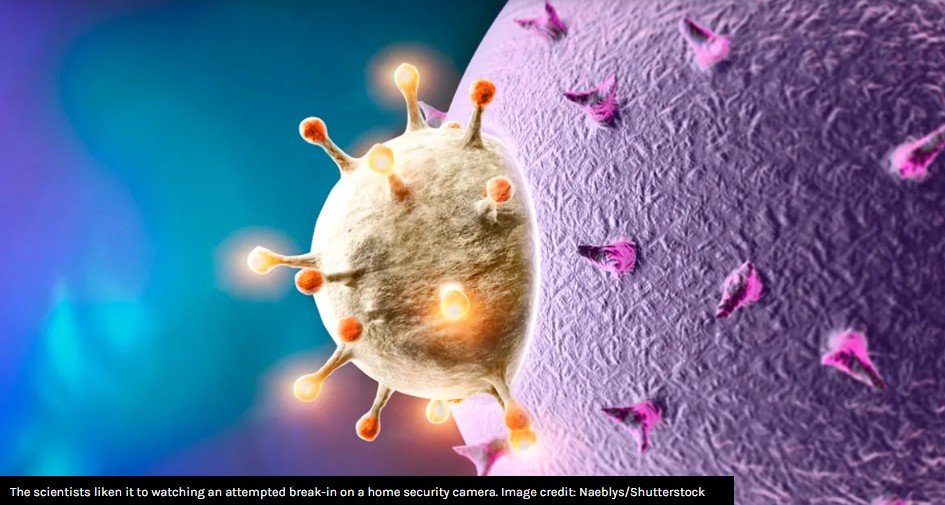
Every virus known today requires a living cellular host in order to reproduce. Viruses cannot manufacture their own proteins because they lack ribosomes, cannot independently generate the metabolic energy required for reproduction, and cannot replicate without commandeering the machinery of an existing cell. This creates an obvious chicken-and-egg problem for any proposal that places viruses before cellular life. If a virus cannot reproduce without a functioning host, how could viruses like those we observe today have existed before the cellular machinery they depend on?
Some virus-first models attempt to solve this problem by proposing hypothetical pre-cellular replicators that were unlike modern viruses and only later became dependent upon cells. Such models may be proposed, but these hypothetical ancestral entities are not viruses that have been directly observed. Based on what we can observe today, viruses are dependent biological entities. Every known viral replication cycle begins with something considerably more complex already in existence, a living cell.
This means viral simplicity should not automatically be interpreted as primitive ancestry. A virus is simple partly because it depends on another biological system to perform functions it cannot. From a creation model, this relationship is unsurprising. Life came first. Viruses, whether originally designed biological elements, degraded genetic systems, or products of subsequent genetic deterioration, depend upon biological machinery that was already present.
VIRUSES MUTATE AT EXTRAORDINARY RATES
RNA viruses in particular have extremely high mutation rates. Their replication machinery frequently introduces copying errors, producing enormous populations of genetic variants. This rapid mutation is often treated as an evolutionary advantage because large viral populations can produce variants that can survive changing conditions. But another side of the story is frequently overlooked.
Experimental research has repeatedly shown that most random mutations in studied RNA viruses reduce viral fitness. Research on vesicular stomatitis virus, for example, found that most random single-nucleotide mutations reduced reproductive fitness, with a substantial percentage being lethal.² Similar patterns have been observed in other RNA viruses. Researchers studying RNA viruses have therefore described these viruses as existing near an error threshold. If their mutation rate is pushed too high, so many damaging mutations accumulate that the viral population can collapse through a process known as lethal mutagenesis.³
This is not a picture of mutations routinely improving genetic systems. It is a picture of enormous numbers of genetic changes being generated, many of which natural selection must continually eliminate. Mutation produces variation, but much of that variation is damaging.
NATURAL SELECTION DOES THE WEEDING
Natural selection is very effective at removing viral variants that cannot reproduce successfully. An infected cell may produce thousands of viral particles, each with numerous genetic differences. Many variants will function poorly, some may not function at all, and others may be successfully destroyed by the immune system. A small fraction may happen to have characteristics that let them escape an antibody, bind a receptor differently, tolerate a drug, or reproduce more efficiently. Those surviving variants reproduce, and this is natural selection.
Nothing about this process requires the mutation itself to represent an overall improvement in genetic information. Selection simply preserves whatever reproduces most successfully under the existing conditions. Change the environment and the supposed benefit may disappear. Research on viruses has demonstrated precisely this problem. Mutations that increase fitness in one environment can reduce fitness in another.⁴ A mutation may therefore be advantageous without representing some universal genetic improvement.
Natural selection is a powerful filter, but filtering is not the same thing as creating. The process favors certain existing variants over others. It does not explain whether the favored genetic change represents a gain, a loss, an alteration, or damage that happens to be useful under particular circumstances.
LOSS OF FUNCTION CAN INCREASE VIRAL FITNESS
One of the most revealing experimental demonstrations comes from vaccinia virus. Researchers studying a genetically impaired vaccinia virus allowed the virus to reproduce through multiple generations. The viral population eventually became substantially more successful at replication. At first glance, this appears to be a classic example of beneficial evolution, but a genomic examination revealed something very different.
The improvement resulted from mutations that disabled another viral gene. Researchers experimentally confirmed that loss of function in the B12 gene produced a significant fitness increase under those particular conditions. The researchers specifically discussed gene loss as a mechanism that can contribute to viral adaptation.⁵ The virus adapted, natural selection worked, and fitness increased, yet the genetic mechanism involved the loss of an existing function.
This illustrates why adaptation and upward genetic evolution should not automatically be treated as synonymous. A virus can become more successful in a given environment while simultaneously losing a function it previously possessed. Increased fitness, therefore, does not necessarily mean increased genetic complexity.
A BENEFICIAL MUTATION IS NOT NECESSARILY GENETIC IMPROVEMENT
Evolutionary discussions often describe mutations by their effect on reproductive fitness. A mutation that increases reproduction in a particular environment is classified as beneficial. That definition is legitimate within population genetics, but it can create confusion when the word beneficial is assumed to mean an overall improvement in the genetic system.

Beneficial means beneficial under a particular selective condition. It does not necessarily mean that a genetic system has become more complete, sophisticated, or functional overall. Destroying a receptor could protect an organism from a pathogen. Damaging an enzyme could prevent a toxin from being processed. Deleting part of a viral protein could prevent an antibody from recognizing it. Each could provide a selective advantage while simultaneously involving degradation, alteration, or loss of an existing biological function.
The environment determines whether the change is useful. Change the conditions, and the same mutation may become neutral or harmful. This differs from a process that continually constructs increasingly sophisticated biological systems.
IMMUNITY ACTS AS A POWERFUL FILTER
Our immune systems place tremendous selective pressure upon viruses. A viral population contains many variants, and antibodies and other immune defenses eliminate those they successfully recognize. Variants altered in ways that reduce recognition may reproduce more successfully. This is commonly called immune escape, and the observation itself is not in dispute.
But consider what is actually occurring. The immune system is eliminating vulnerable viral variants while allowing resistant ones to survive. Natural selection is sorting variants produced by mutation. A variant’s survival does not, by itself, tell us whether its genetic change created something new, altered something old, or damaged something in a way that became advantageous. That requires examination of the actual mutation.
Simply calling the survivor more fit does not answer the question. Fitness tells us which variant reproduced more successfully under the circumstances. It does not tell us whether the underlying genetic system became objectively better.
HIGH VIRULENCE IS NOT NECESSARILY AN ADVANTAGE
Another interesting feature of viruses is that becoming more deadly does not necessarily make a virus more successful. Viruses require hosts in order to reproduce. If a virus incapacitates or kills its host too rapidly, it may shorten its own opportunity for transmission. This contributes to what researchers call a virulence-transmission tradeoff.
The principle is not absolute. Some viruses spread extensively before the host dies, while others use animal reservoirs, vectors, or transmission strategies in which host death imposes less reproductive cost. Nevertheless, killing the host too quickly can reduce transmission opportunities for many viruses.⁶ This helps explain why highly successful viruses do not necessarily become increasingly deadly.
In many circumstances, the more successful viral strategy is simply to reproduce and transmit without seriously harming the host. Increased lethality therefore should not automatically be interpreted as evolutionary advancement. From the virus’s own reproductive standpoint, extreme virulence can even become a disadvantage.
MOST VIRUSES ARE NOT DEADLY HUMAN PATHOGENS
Our perception of viruses is understandably dominated by disease. Influenza, HIV, Ebola, smallpox, COVID-19, and other diseases have caused enormous human suffering. Yet the viruses that cause serious human disease represent only a tiny window into the viral world. But these deadly viruses certainly get the most attention: as they should.
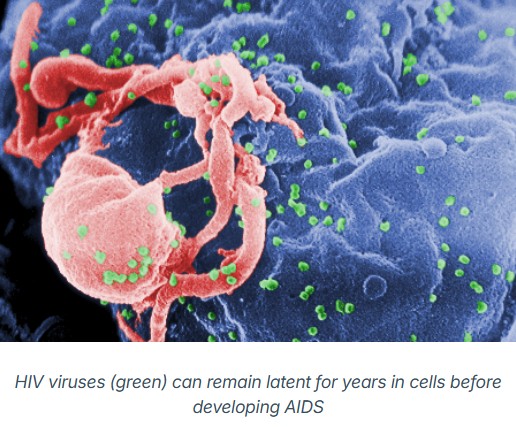
Viruses exist virtually everywhere life exists, and vast numbers infect bacteria, plants, fungi, animals, and other microorganisms without causing human disease.
Research is increasingly revealing viruses that participate in beneficial or mutualistic relationships with their hosts. Viruses help regulate microbial populations and ecosystems, bacteriophages influence bacterial communities, and some viral relationships can benefit plants and animals. Viral systems are also increasingly used in medicine and biotechnology.⁷ Harvard Medicine has highlighted this less familiar side of viruses, noting that viruses form part of biological communities, can contribute to health, and can be harnessed for vaccines, therapies, diagnostics, and scientific research.⁸
Viruses therefore should not simply be thought of as tiny disease organisms continually evolving toward greater deadliness. The biological reality is much more complicated, and many viruses are neutral or beneficial within the ecosystems in which they exist.
VIRUSES DEMONSTRATE CHANGE, BUT WHAT KIND?
Viruses clearly demonstrate genetic change, mutation, natural selection, adaptation, and immune escape. None of this is in dispute. What should be questioned is the additional assumption that these observations demonstrate the gradual upward construction of increasingly complex genetic systems.
In studied RNA viruses, most random mutations are harmful.² Excessive mutation can drive viral populations toward extinction.³ Fitness gains can depend upon a particular environment.⁴ Laboratory experiments have directly demonstrated situations in which viral fitness increased because an existing gene lost its function.⁵ These observations fit comfortably within a framework of genetic entropy in which existing genetic systems are continually altered, damaged, and filtered by natural selection.
From the creation model presented here, mutations continually alter existing genetic information. Natural selection removes many damaging changes, while other mutations survive because their effects are too small for selection to efficiently eliminate. Occasionally, an altered or damaged variant may receive a selective advantage because of its particular environment. The survivor is not necessarily genetically superior. It is simply the survivor.
NATURAL SELECTION CANNOT SELECT WHAT MUTATION HAS NOT ALREADY OCCURRED
Natural selection does not create viral mutations. Selection chooses among variants after genetic changes have already occurred. When immune defenses eliminate one strain, and another survives, selection has occurred. When an antiviral drug destroys susceptible viruses while a resistant variant survives, selection has occurred. When loss of an existing viral function unexpectedly increases reproductive success, selection can preserve that loss.
None of these observations demonstrate natural selection constructing genetic information from nothing. They demonstrate selection acting upon biological systems that already possess functional genetic information. From a creation perspective, this is exactly what we would expect after originally functional genetic systems became subject to mutation and deterioration.
Mutation provides variation, natural selection sorts it, and survival tells us which variant succeeded under current conditions. It does not by itself demonstrate that the underlying genetic system has progressed upward.
CONCLUSION
Viruses are frequently presented as evolution occurring before our eyes. In one sense, that statement is definitional. If evolution means inherited genetic change within a population, then viruses unquestionably evolve. But that definition does not settle the larger question of whether the observed changes demonstrate a mechanism capable of transforming simpler biological systems into increasingly complex ones.
SOURCES
¹ Wessner, David R., “The Origins of Viruses,” Nature Education, 2010.
https://www.nature.com/scitable/topicpage/the-origins-of-viruses-14398218/
² Sanjuán, Rafael, et al., research on the fitness effects of random mutations in RNA viruses and viral mutational robustness.
https://pmc.ncbi.nlm.nih.gov/articles/PMC3981611/
³ Research on RNA virus error thresholds, mutation accumulation, and lethal mutagenesis.
https://pmc.ncbi.nlm.nih.gov/articles/PMC7172642/
⁴ Research examining viral fitness and environmental dependence of advantageous mutations.
https://pubmed.ncbi.nlm.nih.gov/9343347/
⁵ Olson, Annabel T., et al., “A Poxvirus Pseudokinase Represses Viral DNA Replication via a Pathway Antagonized by Its Paralog Kinase,” PLOS Pathogens, 2019. https://doi.org/10.1371/journal.ppat.1007608
⁶ Research discussing the virulence-transmission tradeoff and why greater lethality does not necessarily produce greater viral fitness.
https://pmc.ncbi.nlm.nih.gov/articles/PMC10066022/
⁷ Roossinck, Marilyn J., research on beneficial and mutualistic relationships between viruses and their hosts.
https://pmc.ncbi.nlm.nih.gov/articles/PMC4468468/
⁸ Dutchen, Stephanie, “The Good that Viruses Do,” Harvard Medicine Magazine, Spring 2022.
https://magazine.hms.harvard.edu/articles/good-viruses-do