May 6, 2026– updated October 6, 2026
WHAT IS ANTIBIOTIC RESISTANCE?
Antibiotic resistance occurs when bacteria survive exposure to an antibiotic that would ordinarily kill them or prevent their reproduction. Resistant bacteria can then reproduce and increase their proportion within the bacterial population. This is a serious medical problem because infections that were once easily controlled can become difficult to treat.
There should be no dispute that this represents natural selection. A population contains genetic variation. An antibiotic creates a powerful environmental pressure. Susceptible bacteria are eliminated or inhibited, while bacteria with resistance survive at a higher rate and reproduce. Consequently, the population’s genetic composition changes over subsequent generations.
The question is not whether selection occurs. It clearly does.
The important question is what the selection is actually selecting.
ANTIBIOTICS DO NOT TARGET A BACTERIUM’S ENTIRE GENETIC SEQUENCE
Antibiotics are designed to interfere with important structures or biochemical processes within bacteria. Different classes of antibiotics target cell-wall construction, ribosomes and protein production, DNA replication, RNA synthesis, membrane integrity, or metabolic pathways.¹
Resistance develops when something about the bacterium prevents the antibiotic from accomplishing its normal task. For example, the antibiotic’s molecular target may be altered, the bacterium may reduce the drug’s ability to enter the cell, pumps may remove the antibiotic more efficiently, or bacterial enzymes may chemically destroy or modify the drug.
Therefore, antibiotic resistance is not normally a matter of a drug recognizing and destroying one particular bacterial genome while allowing genetically different bacteria to escape. Instead, the antibiotic attacks a particular cellular target or process, and genetic differences can change how effectively that attack works.
WHERE DOES THE RESISTANCE COME FROM?
Resistance can arise through several mechanisms. One is mutation. A change in bacterial DNA can alter an existing protein, regulatory system, membrane component, or metabolic pathway in a way that reduces an antibiotic’s effectiveness.
Another extremely important mechanism is horizontal gene transfer. Bacteria can acquire genetic material from other bacteria, frequently through plasmids or other mobile genetic elements. This means a bacterium does not necessarily have to originate a resistance mechanism through a new mutation. It may acquire an already functioning resistance gene from another organism.²
This distinction is often overlooked when antibiotic resistance is presented simply as an example of mutations creating something new. In many clinically important cases, natural selection acts on biological machinery or genetic information that already exists somewhere within the bacterial population or microbial community.
NATURAL SELECTION DOES NOT CREATE THE MUTATION
Natural selection itself does not design the resistance mechanism. Selection acts upon differences that already exist or that arise through mutation or gene transfer.
Suppose one million susceptible bacteria are exposed to an antibiotic and a small minority possess a mutation that allows them to tolerate the drug. Once the susceptible bacteria are removed, the resistant population has an enormous reproductive advantage. The descendants of the survivors may eventually dominate the population.
This is natural selection in an observable and measurable form.
But notice what happened. The antibiotic did not direct the organism toward a predetermined genetic solution. The environmental pressure eliminated bacteria that could not survive under those conditions and favored bacteria possessing traits that allowed survival. That is powerful evidence for adaptation through selection.
Whether it demonstrates the creative capacity necessary to produce fundamentally new organs, body plans, cellular machinery, or other large-scale biological innovations is a separate question.
RESISTANCE OFTEN COMES WITH A COST
Another important part of the antibiotic-resistance story is that resistance is not necessarily an overall improvement in the bacterium.
Resistance mutations frequently impose what microbiologists call a fitness cost. A mutation may help a bacterium survive in the presence of an antibiotic while reducing its growth rate, metabolic efficiency, competitiveness, transmission, or some other characteristic when the antibiotic is absent.
A meta-analysis examining 179 resistance mutations found that resistance mutations were generally associated with measurable fitness costs, although the size of the cost varied considerably and some resistance mutations produced little or no detectable cost.³
This is exactly what we should expect when we alter an existing biological system. A modification can be beneficial under one environmental condition while being disadvantageous under another.
For example, changing an antibiotic’s binding site may keep the drug from attaching effectively, but that same molecular structure may perform an important normal function for the bacterium. Resistance therefore can involve a biological trade-off rather than an across-the-board improvement.
BUT RESISTANT BACTERIA ARE NOT ALWAYS “WEAKER”
The qualification here is important. It would be inaccurate to claim that resistant bacteria are always permanently crippled or that resistance necessarily disappears when antibiotics are removed.
Bacterial populations can acquire additional compensatory mutations that reduce the fitness cost of resistance while retaining resistance.⁴ Some resistance mechanisms impose very little measurable cost from the beginning. Resistance carried on plasmids can also behave differently from resistance produced by mutations in essential chromosomal genes. Research has found that chromosomal resistance mutations, on average, impose larger fitness costs than plasmid-mediated resistance.⁵
This makes antibiotic resistance more interesting, not less.
We are observing populations adjusting to environmental pressures through mutation, selection, gene acquisition, and compensation. Bacteria can sometimes regain some of the fitness they lost while continuing to resist the antibiotic.
These are genuine biological changes. We should acknowledge them rather than dismiss them.
SOME RESISTANCE INVOLVES LOSS, SOME MODIFICATION, AND SOME INCREASED ACTIVITY
It would also be too simplistic to say antibiotic resistance always arises from damaged or degraded genes.
Sometimes resistance involves loss or reduced function. For example, reduced membrane permeability can prevent an antibiotic from entering the cell efficiently. Other resistance mechanisms involve altered molecular targets, increased expression of existing genes, increased efflux pump activity, or enzymes that modify or destroy antibiotics.
Still other bacteria acquire resistance genes through horizontal gene transfer.
Therefore, no single description explains every example of antibiotic resistance. Some mechanisms involve loss, some alteration, some regulation, and some acquisition of previously existing genetic machinery.
The better question is not simply whether a mutation was “beneficial.” Clearly, resistance can be extremely beneficial in the presence of an antibiotic.
The deeper question is what new biological information or capability actually originated, and what that observation demonstrates about the proposed history of life.
ANTIBIOTIC RESISTANCE SHOWS ADAPTATION VERY WELL
Imagine a bacterial population containing several genetic variants. Introduce an antibiotic, and suddenly the environment changes dramatically. A mutation that previously offered little advantage, or even imposed a disadvantage, may now become the difference between survival and death.
The resistant bacteria reproduce.
The susceptible population declines.
Allele frequencies change.
The population becomes increasingly resistant.
That is adaptation by natural selection, and it is directly observable.
But natural selection does not automatically tell us how much biological innovation a particular genetic change represents. Selection can favor the loss of a structure, modification of a molecular target, increased or decreased expression of an existing protein, acquisition of existing genes, or a genuinely novel molecular function. Those are different genetic events and should be evaluated individually rather than grouped together under the single word “evolution.”
WHAT ABOUT BACTERIA BECOMING MORE OR LESS DANGEROUS?
Some argue that pathogens should naturally evolve toward becoming harmless because killing the host is disadvantageous. Some logic supports this idea, but it is not a universal biological rule.
If killing or severely incapacitating a host prevents a pathogen from spreading, lower virulence can be advantageous. However, pathogen evolution depends upon the relationship between reproduction, transmission, host survival, immune response, and many other factors. Evolutionary models therefore predict trade-offs rather than an inevitable progression toward harmlessness.⁶
A pathogen can remain highly virulent when rapid reproduction or transmission provides a sufficient advantage. Consequently, antibiotic resistance should not be explained by claiming bacteria inevitably become weaker or harmless over time.
MRSA SHOWS WHY THE DISTINCTION MATTERS
Methicillin-resistant Staphylococcus aureus, better known as MRSA, provides a dramatic example of why antibiotic resistance matters medically. Resistant strains can survive treatments that would normally control susceptible S. aureus, making some infections much harder to treat.
MRSA demonstrates selection very clearly. Antibiotic use creates an environment where resistance provides an enormous survival advantage.
But again, demonstrating that selection can spread resistance throughout a bacterial population is different from demonstrating that the same mechanisms can build the major novel biological structures required to transform one fundamentally different type of organism into another.
Those are not equivalent scientific claims.
MICROEVOLUTION SHOULD NOT SIMPLY BE ASSUMED TO PROVE MACROEVOLUTION
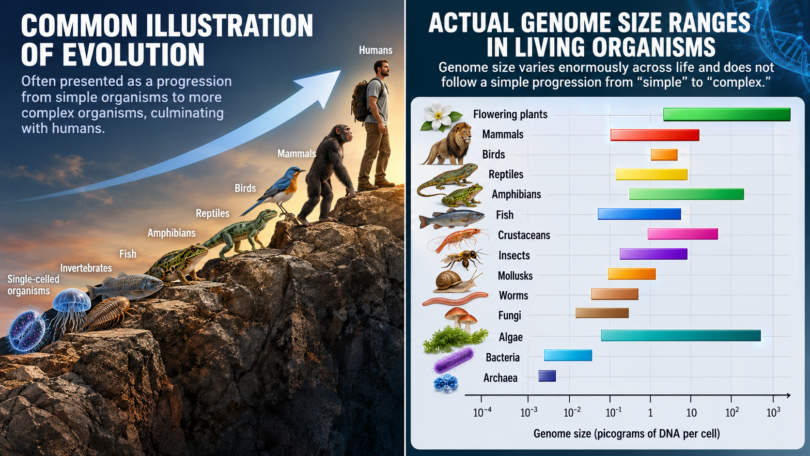
Much confusion comes from using the word evolution to describe many different levels of biological change.
If evolution means a change in allele frequencies within a population, antibiotic resistance unquestionably qualifies.
If evolution means adaptation through natural selection, antibiotic resistance unquestionably qualifies.
If evolution means organisms acquiring mutations and genetic differences over generations, antibiotic resistance again qualifies.
But none of those observations, by themselves, demonstrate that the same processes have unlimited creative power or that they produced all major biological systems and body plans throughout the history of life. That larger proposition requires its own evidence.
Observing bacteria adapt to antibiotics demonstrates that bacteria possess remarkable abilities to survive changing environments. It demonstrates mutation, gene transfer, selection, inheritance, trade-offs, and sometimes compensatory changes.
It does not logically follow that because these mechanisms can produce antibiotic resistance, they therefore explain every proposed large-scale evolutionary transformation.
SUMMARY
Antibiotic resistance is real, observable, and medically important. It is also a genuine example of natural selection.
Antibiotics impose strong environmental pressure. Bacteria with advantageous resistance traits survive and reproduce more successfully, causing resistant forms to increase within the population. Resistance can originate through mutations or through horizontal transfer of genetic information already present in other bacteria.
Many resistance mutations impose measurable fitness costs, although those costs vary considerably. Some bacteria subsequently acquire compensatory mutations that reduce the cost, and some resistance mechanisms impose little detectable cost at all.
The evidence therefore does not justify describing antibiotic resistance merely as damaged bacteria slowly being destroyed. Bacterial populations really are adapting.
But acknowledging adaptation does not require making a much larger inference than the observations support.
Antibiotic resistance demonstrates natural selection exceptionally well. What it does not demonstrate by itself is that mutation and selection can construct the fundamentally new biological systems required for macroevolution.
That is a separate claim, requiring separate evidence.
SOURCES
¹ Kohanski MA, Dwyer DJ, Collins JJ. How antibiotics kill bacteria: from targets to networks. Nature Reviews Microbiology. 2010;8:423–435.
https://pmc.ncbi.nlm.nih.gov/articles/PMC2896384/
² Melnyk AH, Wong A, Kassen R. The fitness costs of antibiotic resistance mutations. Evolutionary Applications. 2015;8:273–283.
https://pmc.ncbi.nlm.nih.gov/articles/PMC4380921/
³ Melnyk AH, Wong A, Kassen R. The fitness costs of antibiotic resistance mutations. Evolutionary Applications. 2015;8:273–283.
https://pmc.ncbi.nlm.nih.gov/articles/PMC4380921/
⁴ Schulz zur Wiesch P, Engelstädter J, Bonhoeffer S. Compensation of fitness costs and reversibility of antibiotic resistance mutations. Antimicrobial Agents and Chemotherapy. 2010;54:2085–2095.
https://pmc.ncbi.nlm.nih.gov/articles/PMC2863634/
⁵ Vogwill T, MacLean RC. The genetic basis of the fitness costs of antimicrobial resistance: a meta-analysis approach. Evolutionary Applications. 2015;8:284–295.
https://pmc.ncbi.nlm.nih.gov/articles/PMC4380922/
⁶ Cressler CE, McLeod DV, Rozins C, Van Den Hoogen J, Day T. The adaptive evolution of virulence: a review of theoretical predictions and empirical tests. Parasitology. 2016;143:915–930.
https://pmc.ncbi.nlm.nih.gov/articles/PMC4873896/