
09/29/2026
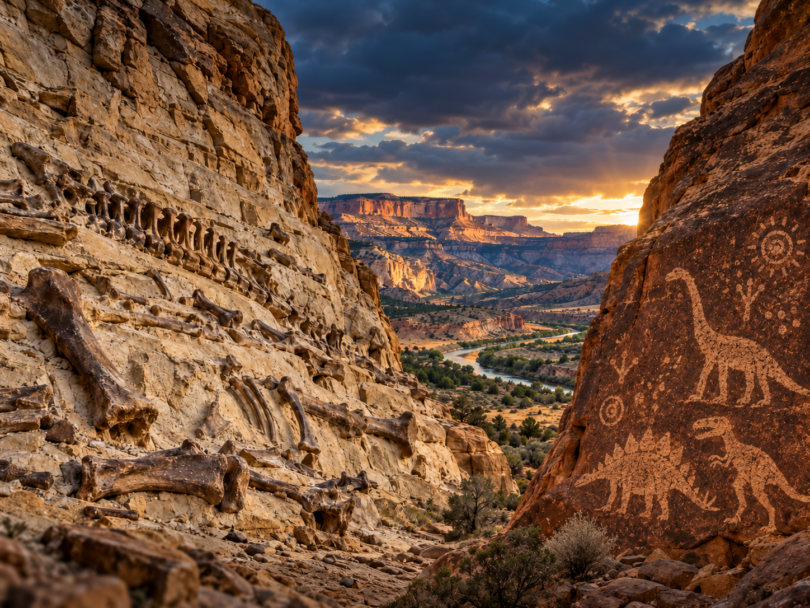
Dinosaur National Monument, located along the Utah-Colorado border, is famous for one of the largest concentrations of exposed dinosaur bones in the world. The National Park Service reports that approximately 1,500 dinosaur bones remain exposed in the Quarry Exhibit Hall, including remains of Allosaurus, Apatosaurus, Camarasaurus, Diplodocus, and Stegosaurus.¹
But there is another interesting feature within the same national monument filled with dinosaur fossils: ancient petroglyphs and pictographs.
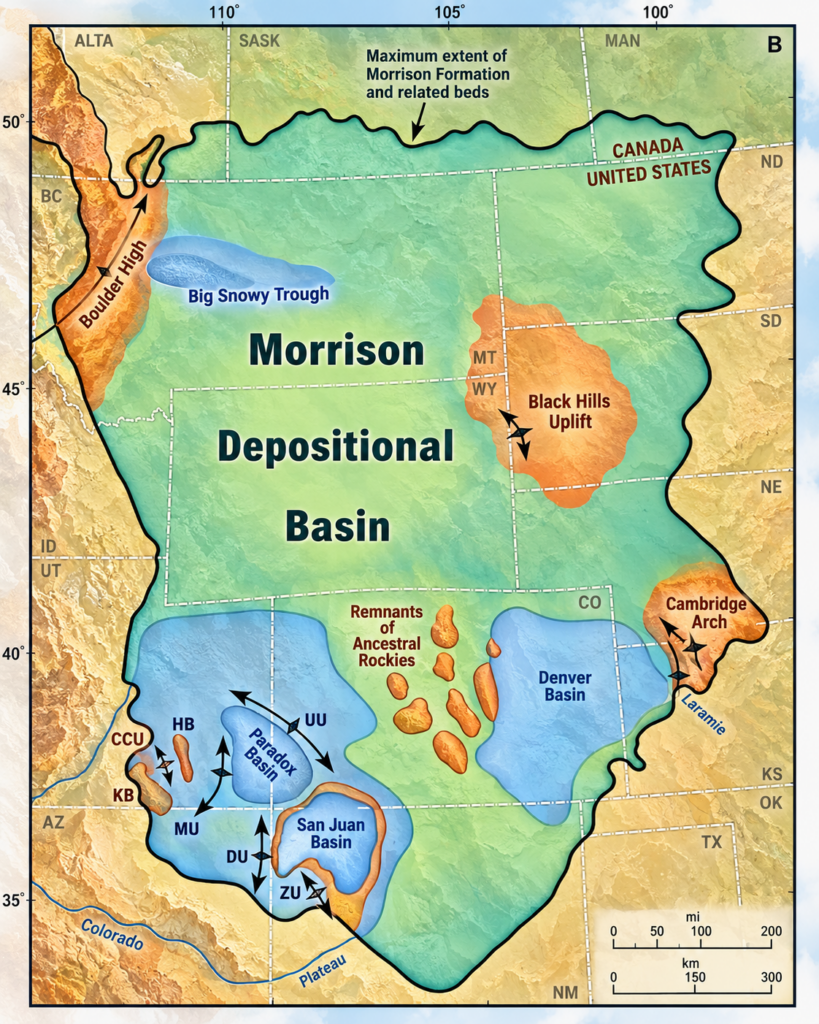
Many of these rock carvings are attributed to the Fremont people, who lived in the region between approximately A.D. 300 and 1300.² At Cub Creek, the National Park Service specifically identifies several unusually large animal carvings as “lizard petroglyphs,” some approximately five feet long. The Park Service also notes that these particular large lizard figures are uncommon at other sites.³
WHAT DID THE ARTISTS INTEND TO DEPICT?
Some observers have suggested that certain ancient rock carvings resemble dinosaurs or other large reptiles. Similar claims have been made regarding ancient artwork at several locations in the American Southwest.
A resemblance alone cannot establish what the original artist intended to portray. Ancient rock art is frequently stylized, and without written explanations from the people who created these images, their precise meaning can be difficult or impossible to determine. The National Park Service interprets the Cub Creek figures as lizards, not dinosaurs.²
Therefore, these petroglyphs should not be presented as proof that humans and dinosaurs lived together but it certainly can be used to imply the plausibility.
BUT THE LOCATION IS STILL INTERESTING
What makes Dinosaur National Monument particularly fascinating is the combination of evidence found within the same geographical region.
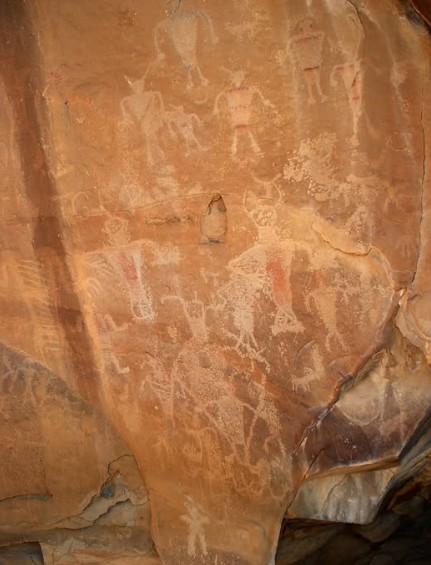
Here we have enormous deposits containing thousands of dinosaur bones. In the surrounding landscape we also find evidence that people inhabited the area for thousands of years, along with numerous ancient carvings depicting humans, animals, and several unusually large reptile-like creatures.²
None of this independently establishes human-dinosaur coexistence. Nevertheless, when ancient traditions, unusual artwork, dinosaur fossils, and other historical evidence are considered together, it is reasonable to examine the evidence rather than dismiss the question simply because the conventional geological timeline says such coexistence could not have occurred.
The rock art does not prove the case for human and dinosaur coexistence but it is certainly interesting enough to ask the question.
Maybe the people that made the rock art saw the fossils and from the evidence recreated dinosaurs. Either way– it is an interesting thought experiment.
SOURCES
¹ National Park Service, “Quarry Exhibit Hall,” Dinosaur National Monument.
https://www.nps.gov/dino/planyourvisit/quarry-exhibit-hall.htm
² National Park Service, “Petroglyph and Pictograph Sites,” Dinosaur National Monument.
https://www.nps.gov/dino/learn/historyculture/viewing-petroglyphs-and-pictographs.htm
³ National Park Service, “Cub Creek Petroglyphs Pullout #14,” Dinosaur National Monument.
https://www.nps.gov/places/cub-creek-petroglyphs-pullout-14.htm
