
09/29/2026
The Morrison Formation is one of the most extensive and fossil-rich sedimentary formations in the western United States. It extends across much of Colorado, Utah, Wyoming, New Mexico, Montana, and neighboring states. The formation contains enormous quantities of mudstone, sandstone, conglomerate, and bentonite derived from volcanic ash.¹
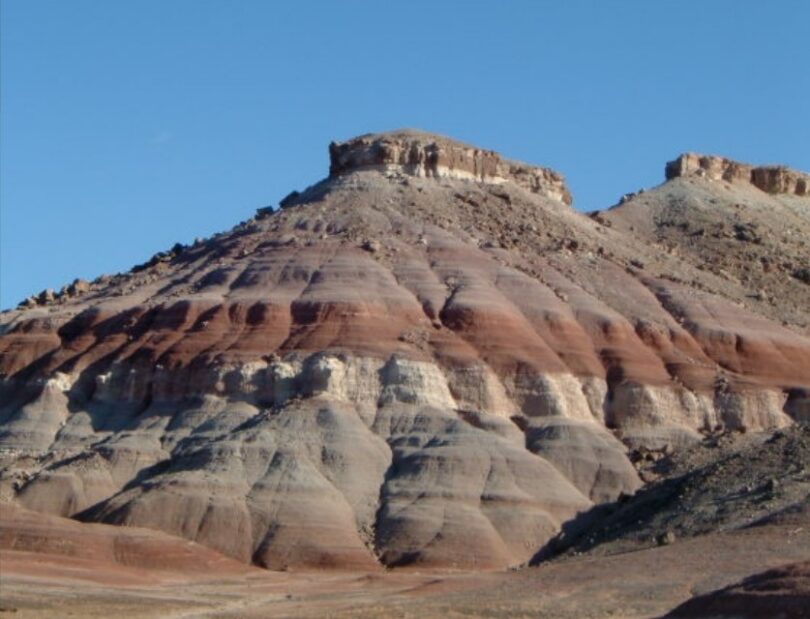
Volcanic activity played an important role in portions of the Morrison Formation. The Brushy Basin Member contains extensive bentonitic clay produced from altered volcanic ash, while other portions of the formation contain sediments deposited by rivers, floodplains, lakes, and large water systems.²
Rather than representing quiet conditions everywhere, the formation preserves evidence of enormous quantities of sediment being transported across a very large region.
DINOSAUR NATIONAL MONUMENT RECORDS MASS BURIAL
Some of the most dramatic evidence comes from Dinosaur National Monument along the Utah-Colorado border. More than 1,500 dinosaur bones have been exposed in the famous quarry wall, including remains from numerous dinosaur species.³ These bones occur within sandstone that the National Park Service identifies as sediment deposited by a river channel.⁴
The bones are not simply individual skeletons preserved exactly where each animal died. Numerous animals and species became concentrated together within transported sediment. Freshwater clams and other organisms are also found within the Morrison ecosystem and fossil deposits.⁵ Whatever interpretation is placed upon the larger geological history, the immediate burial environment demonstrates that substantial amounts of sediment and biological material could be moved and buried rapidly by water.
VOLCANIC ASH AND WATER OCCURRED TOGETHER
Large quantities of volcanic material are also preserved within the Morrison Formation. Bentonite beds represent volcanic ash that was subsequently altered to clay. The National Park Service describes portions of the Brushy Basin Member as mud, silt, sand, and volcanic ash deposited in watery environments such as lakes and wetlands.⁶
The Morrison Deposit Basin is massive.
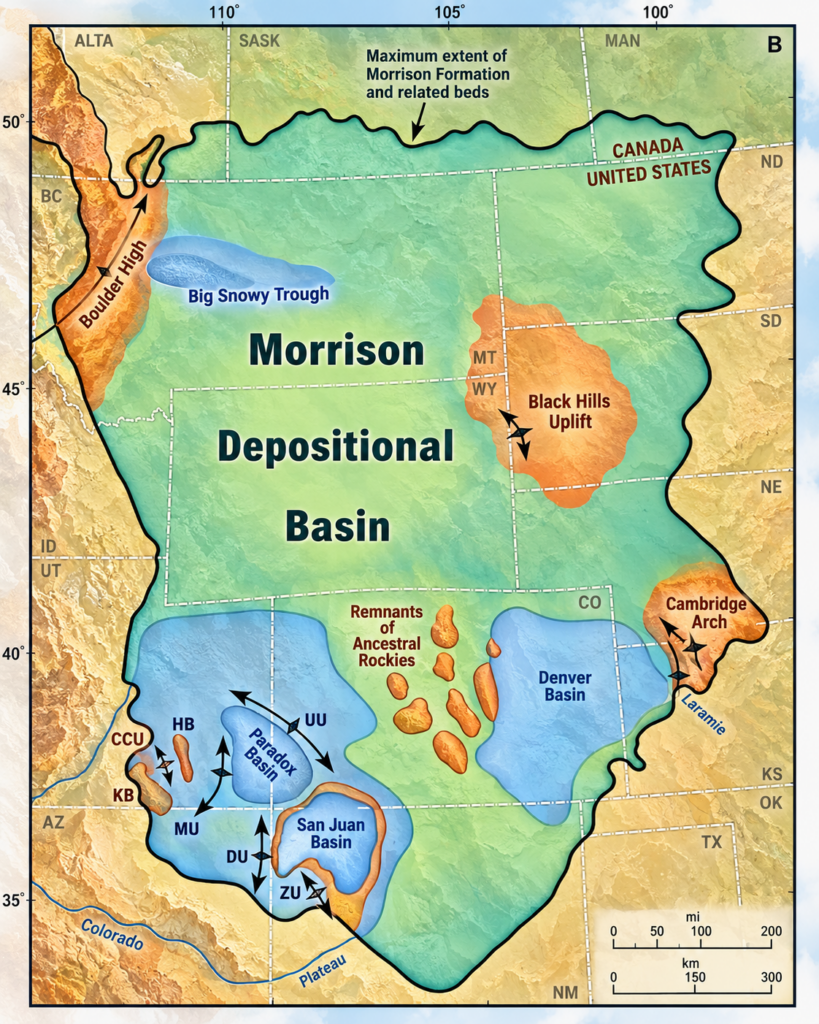
This combination is significant. Volcanic eruptions could supply tremendous quantities of loose ash and sediment, while moving water could transport and redeposit those materials over considerable distances.
The evidence therefore does not require that the entire Morrison Formation was produced by one mudflow. However, it clearly demonstrates conditions capable of producing rapid sediment transport and catastrophic burial within individual portions of the formation.
A SNAPSHOT OF CATASTROPHIC BURIAL
The fossil deposits of the Morrison Formation demonstrate an important geological principle: a large fossil assemblage does not necessarily represent organisms slowly accumulating at the location where they lived and died.
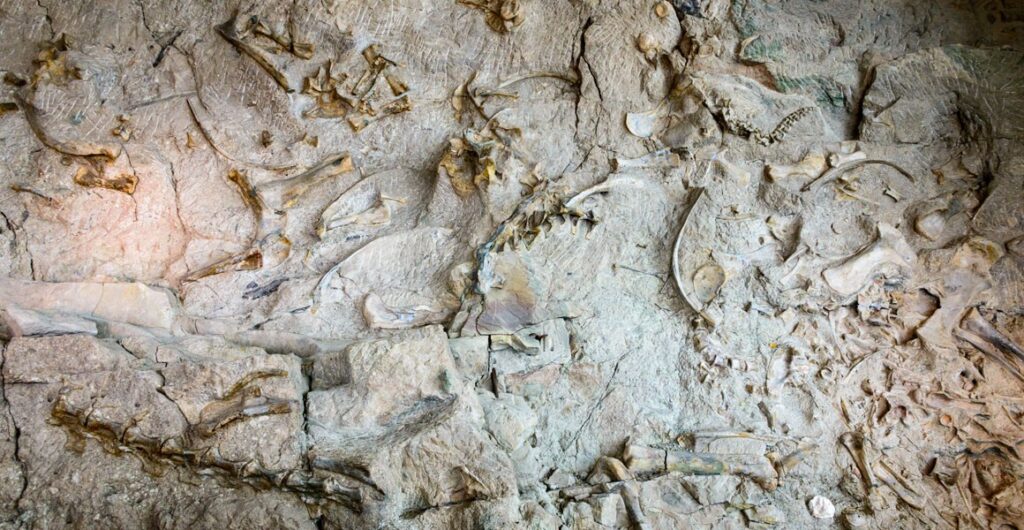
At Dinosaur National Monument, dinosaur bones and other remains became concentrated within water-deposited sediment. The deposit therefore records substantial transportation and burial rather than merely the peaceful accumulation of individual animals over time.
The Morrison Formation should consequently be understood as evidence that large-scale water movement, volcanic sediment, and rapid burial played major roles in producing portions of the fossil record. The scale of these deposits provides an important reminder that catastrophic processes can accomplish enormous amounts of geological work in relatively short episodes.
SOURCES
¹ U.S. Geological Survey, “Morrison Formation,” Geologic Names Lexicon.
https://ngmdb.usgs.gov/Geolex/UnitRefs/MorrisonRefs_9394.html
² National Park Service, “Rock Layers, Colorado National Monument.”
https://www.nps.gov/colm/learn/nature/rock-layers.htm
³ National Park Service, “Morrison Formation, Dinosaur National Monument.”
https://www.nps.gov/dino/learn/nature/morrison-formation.htm
⁴ National Park Service, “Morrison Formation.”
https://www.nps.gov/places/morrison-formation.htm
⁵ National Park Service, “Dinosaur Contemporaries.”
https://www.nps.gov/dino/learn/nature/dinosaur-contemporaries.htm
⁶ National Park Service, “Bentonite Hills.”
https://www.nps.gov/places/bentonite-hills.htm
